Standing Sentry: The Noble History and Traditions of the Welsh Guard
If you’ve ever stood outside Buckingham Palace, you’ve likely seen them: the stoic figures in scarlet tunics and towering black hats, standing perfectly still despite the flurry of tourists. Among these elite regiments, the Welsh Guards hold a special place as the youngest of the five Foot Guards regiments—and certainly one of the most distinguished.
If you’ve ever stood outside Buckingham Palace, you’ve likely seen them: the stoic figures in scarlet tunics and towering black hats, standing perfectly still despite the flurry of tourists. Among these elite regiments, the Welsh Guards hold a special place as the youngest of the five Foot Guards regiments—and certainly one of the most distinguished.
Today, we’re swapping the parade ground for the crafting table as we explore the heritage of these iconic soldiers and introduce our newest, softest recruit.
A Century of Service
Compared to their peers, the Welsh Guards are the "new kids on the block"—but their history is no less storied. They were raised on February 26, 1915, by order of King George V, to ensure that Wales had its own dedicated regiment within the Household Division alongside England, Scotland, and Ireland.
They mounted their very first King’s Guard at Buckingham Palace just three days later, on St. David’s Day. Since then, they have served with distinction in nearly every major conflict, from the trenches of WWI to modern-day peacekeeping missions, all while maintaining their role as the personal guardians of the Monarch.
How to Spot a Welsh Guard
To the untrained eye, all the Foot Guards look the same. But look closer! Each regiment has subtle "tells" in their uniform. To identify a Welsh Guard, remember these two secrets:
- The Button Gap: Their tunic buttons are arranged in groups of five (representing their position as the fifth regiment formed).
- The Plume: On their towering bearskin hats, they wear a white-green-white plume on the left side, echoing the colors of the Welsh flag.
Motto: Cymru am Byth — Wales Forever.
- The Bearskin Secret: Those famous hats are about 18 inches tall and weigh roughly 1.5 pounds. They were originally designed to make the soldiers look taller and more intimidating to their enemies.
- Sentries Don't Smile: While they look like statues, they are active-duty soldiers. If you get too close or interfere with their "beat," they are authorized to shout commands (and yes, it's quite loud!).
St. David’s Day Tradition: Every March 1st, members of the regiment receive a leek (the national symbol of Wales) to wear in their caps, a tradition often carried out by a member of the Royal Family.
Meet Our Felted Sentry
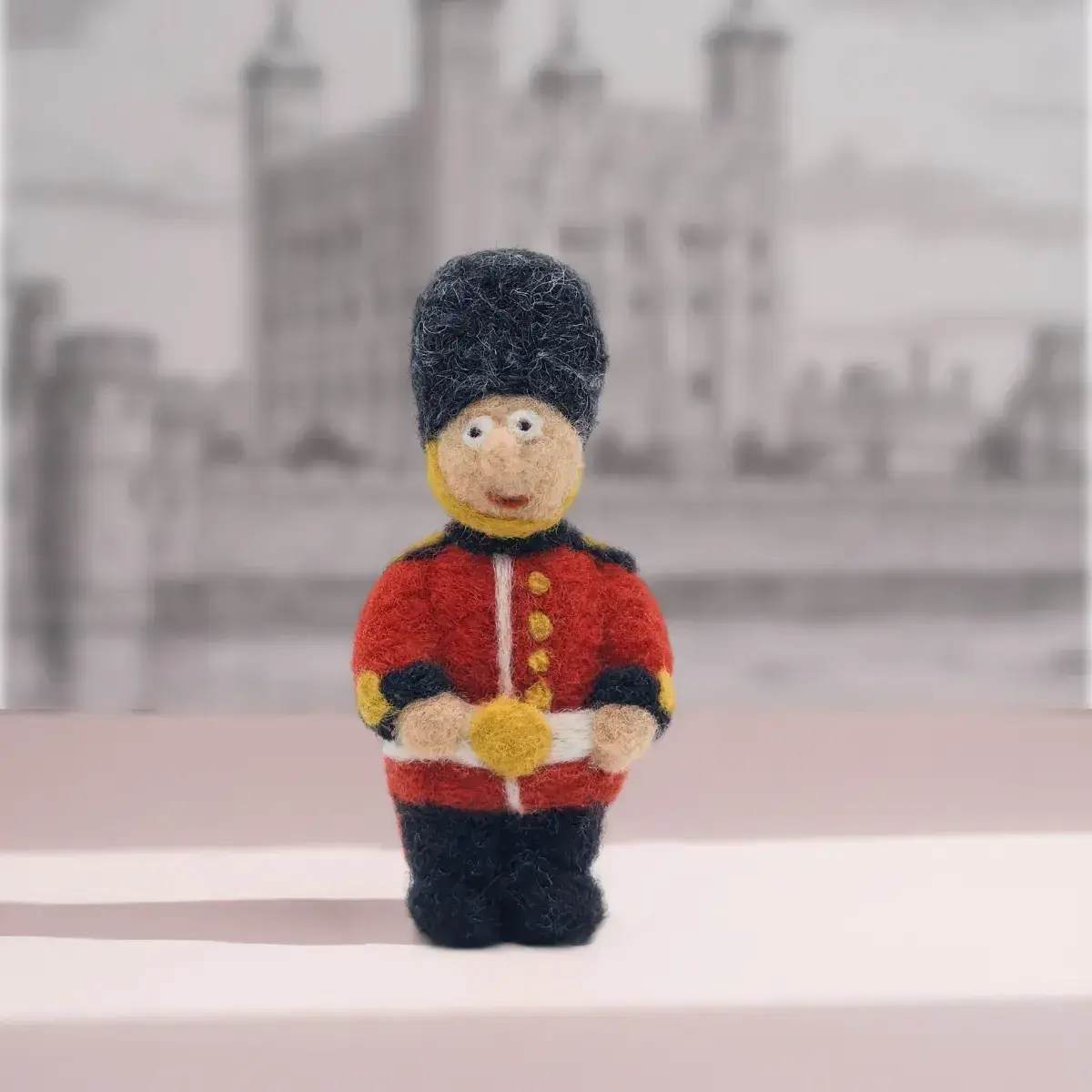
We’ve captured all the majesty of the Household Division and shrunk it down into a much more "huggeable" format. Our Needle-Felted Welsh Guard is ready to stand sentry on your desk, mantel, or nursery shelf.
Details that make him special:
- The Iconic "Bearskin": We’ve used a deep, textured charcoal wool to recreate the look of the classic guard’s hat, giving him that signature top-heavy silhouette.
- Scarlet & Gold: His tunic is felted in a vibrant "Guardsman Red" with hand-applied yellow felt buttons and a crisp white belt.
- The "At Ease" Expression: Unlike the stern faces you’ll see at the Palace, our little guy has a gentle, hand-stitched look that’s more "friendly neighbor" than "elite soldier."
- Stand-Alone Design: He’s weighted and firm, meaning he won't topple over when the "Changing of the Guard" (or your cat) happens nearby.
He’s the perfect gift for history buffs, London lovers, or anyone who appreciates a man in a very tall hat.
